

Paddle Boats, Canoes, and Rowboats on West Lake Okoboji: A Guide From Our Dock
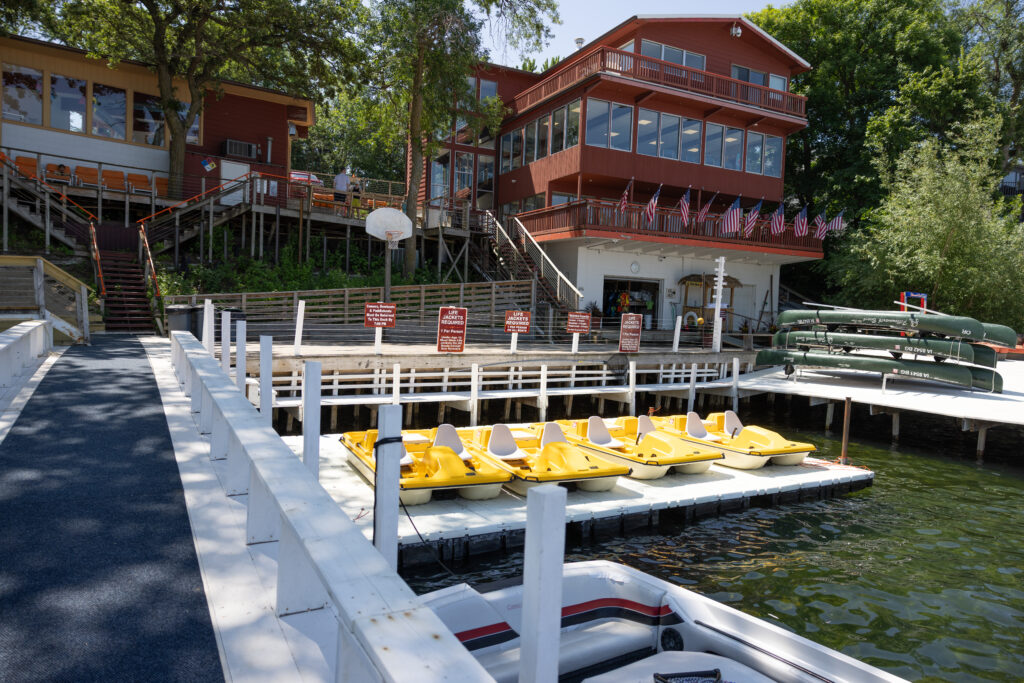
Most mornings on West Lake Okoboji, the water goes glass around 6:30. The ski boats haven’t fired up. The wind hasn’t decided what it’s doing yet. From our Main Beach Dock, the largest dock on the lake, you can see clear to the sand bottom, and the loudest thing you’ll hear is the rope rigging on the sailboat tapping its mast. That’s the hour to take a canoe out. For guests staying with us, the canoes, paddle boats, and rowboats are right there waiting on the dock. Paddles in the rack, life jackets in the bin. No rental counter, no sign-up sheet, no hourly rate. They’re complimentary, self-serve, and have been part of staying at Fillenwarth Beach for as long as anyone around here can remember. We’ve been doing it this way since A.T. Fillenwarth built his first cottage on this shoreline in 1918, a one-room place called Old Faithful that had no glass in the windows, just awnings and screens. Old Faithful eventually became the indoor pool. The cottages around it are now in their fourth generation of family ownership. The lake out front is still one of only three spring-fed, blue-water lakes in the world. (The other two are in Switzerland and Canada. We bring it up a lot.) This is a guide to actually using the boats on our dock: when to go, where to head, what each one is good for, and a few things first-time paddlers tend to learn the hard way. A quick note on West Lake Okoboji itself West Okoboji isn’t a typical Midwest lake. It runs about 134 feet at its deepest point and was carved by the same glacier that left the boulder-strewn shoreline up at our North Beach. The water is cold, clear, and clean enough that your kids will watch fish swim under the canoe. It also gets busy. By 10 a.m. on a July Saturday, you’ll see ski boats, wakeboard towers, pontoons, and the occasional sailboat on the move. None of that is bad (half the fun of staying on West Okoboji is watching the lake come alive), but it’s worth knowing if you’re planning to paddle. Early mornings and late evenings are the calm windows. Early afternoons are not. What’s actually on our dock We keep a fleet of canoes, paddle boats, and rowboats tied up at the Main Beach. Numbers shift across the season as boats rotate in and out for maintenance, but on a normal afternoon there are enough for several families to head out at once. Paddles, oars, and life jackets in every size from toddler up live in the dock-side gear box. Here’s how we’d think about which boat to grab. Canoes A canoe is the one for going somewhere. Two adults, an older kid, a small cooler. You can comfortably head north along the shoreline toward our North Beach docks, where the glacier-formed rock makes the water look completely different than it does down at Main Beach. You can also paddle south past our South Beach toward the public sand beach, which is one of the prettiest in the area. Two practical notes from years of watching guests head out: The bow paddler steers less than they think. The stern (back) paddler does most of the steering. Lean into turns, not away from them. People who tip canoes almost always tip them by leaning the wrong way. Canoes handle wind better than paddle boats. If there’s a 10-mph breeze on the water, take a canoe. Paddle boats Paddle boats are the family boat. Two pedalers up front, two passengers in the back, and a rudder you steer with a stick that one of the kids will fight you for. They’re slow, stable, and almost impossible to flip, which makes them perfect for the eight-year-old who has decided this is the day they captain something. The race we see most often: two boats, one family in each, first one to the swim platform. A 70-yard sprint that ends in laughter and a cramp in everyone’s quad. We don’t recommend it for sustained exercise. We do recommend it. A note about wind: paddle boats get pushed around when it picks up. They sit high and the pedal drive doesn’t bite the way a paddle does. On breezy afternoons, take a canoe instead, or wait for evening. Rowboats Rowboats are the boat people overlook. They shouldn’t. A rowboat takes 30 seconds to figure out and gives you the best workout of the three. It’s also, honestly, the most peaceful. You sit facing the wake you’ve already made, watching the dock get smaller behind you, with nothing to do but pull and listen. We have grandparents who take a rowboat out every morning before coffee. Some of them have been doing it for forty years. Tip: shorter, smoother strokes track straighter than long ones. Rowboats want to zigzag in the hands of someone trying too hard. When to go out The best paddling windows on West Okoboji, in order: Sunrise to about 8:30 a.m. Flat water, no boat traffic, fish visible under the hull. An hour before sunset until dark. We’re located on Sunset Beach for a reason. The west-facing shoreline gets the full color show, and most ski boats are off the water by 8 p.m. Cloudy weekday mornings. Underrated. Cool, calm, no glare. Skip a paddle on Saturday afternoons in July, anything with a small craft advisory from the National Weather Service, and the half-hour after a thunderstorm passes. The wind clocks around and gets sneaky. What to bring Life jackets and paddles are on the dock. You should bring: Sunscreen, applied before you launch. Reapplying mid-canoe is comedy. Water shoes or sandals you don’t mind getting wet. A water bottle. A dry bag, or a Ziploc, for your phone. Phones in canoes is how phones become memories. A hat with a strap. If you’re going out for more than an hour, throw in a snack. If you’re going at sunset, throw in